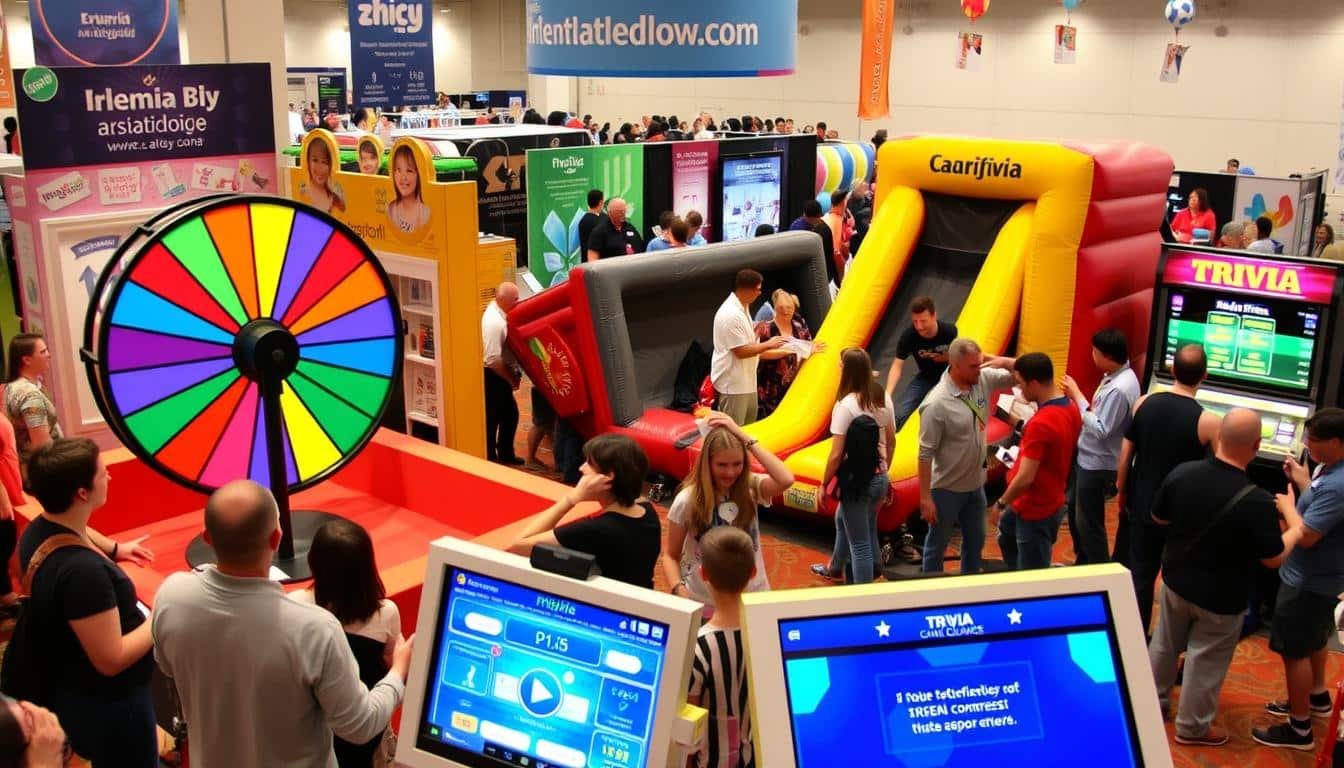
The Booth Games attracting the largest crowds are usually not the ones with the biggest banners or the longest product brochures. They are the booths where people are doing something. Someone is racing against a timer.
A crowd is watching a claw machine challenge. People are scanning QR codes to join a leaderboard.
A visitor is laughing after failing a reaction game in front of friends. This shift is changing how brands approach exhibitions and live events. Instead of relying only on static displays and sales conversations, companies are now using custom branded games to pull attendees into the experience. And it’s working.
Trade Show Audiences Have Changed
Trade show visitors today are overloaded with information. A typical exhibition floor contains:
- Hundreds of booths
- Endless product demos
- Sales pitches everywhere
- Screens competing for attention
Most attendees make decisions within seconds about whether a booth is worth stopping at. Passive booths struggle because they require visitors to choose engagement. Interactive Booth Games reverse that. They create curiosity naturally. A flashing leaderboard, a giant reaction game, or a digital prize challenge immediately gives people a reason to pause and look. That small moment of curiosity is often enough to start a conversation.
Why “Play” Works So Well at Events
Games work because they tap into natural human behavior. People enjoy:
- Competition
- Rewards
- Challenges
- Social interaction
- Quick dopamine hits
- Public recognition
Even simple mechanics can create strong engagement. For example:
- “Tap as fast as possible in 10 seconds”
- “Catch the falling products”
- “Spin the wheel to unlock prizes”
- “Answer 5 trivia questions”
- “Beat the top score”
These activities feel low-pressure and fun, which lowers the resistance people normally have toward branded interactions. Instead of feeling like they are being sold to, visitors feel entertained. That difference matters a lot.
Interactive Booth Games Increase Dwell Time
One of the biggest challenges at trade shows is getting people to stay longer at a booth. Longer dwell time usually means:
- More conversations
- Better product understanding
- Higher lead quality
- Increased brand recall
Traditional booths often get only a few seconds of attention. Interactive experiences can keep visitors engaged for several minutes. And when multiplayer or leaderboard mechanics are involved, people often stay even after their turn ends. They watch others play. They cheer for teammates. They try again to improve their score. This creates energy around the booth something static displays rarely achieve.
Games Naturally Improve Lead Capture
Many attendees avoid booths because they expect immediate sales pitches or long forms. Games create a softer entry point. Instead of asking: “Would you like to speak with sales?” Brands can ask: “Want to try the challenge?” That small change dramatically improves participation. Once visitors are engaged, brands can collect leads through:
- QR code registrations
- Email entry before gameplay
- Prize redemption forms
- Digital scoreboards
- Personalized result screens
Because users are already emotionally invested in the experience, they are usually more willing to share information. The lead capture process feels like part of the game instead of an interruption.
Social Sharing Extends the Booth Beyond the Event
One of the biggest advantages of experiential gaming is its ability to generate organic social content. People naturally share:
- High scores
- Funny gameplay moments
- Team competitions
- Winning reactions
- AR experiences
- Prize celebrations
This transforms a physical booth into online visibility. Many brands now intentionally design activations around “shareable moments.”
Examples include:
- AI photo booths
- AR face filters
- Giant LED scoreboards
- Slow-motion reaction recordings
- Multiplayer challenges
- Personalized result screens
When attendees post these experiences online, the activation continues reaching audiences even after the event ends.
Popular Interactive Booth Games Brands Are Using
Reaction Games
Fast-paced tapping or reflex challenges are popular because they are easy to understand instantly.
Benefits:
- Short play sessions
- High replay value
- Competitive energy
- Great for leaderboards
These work especially well in crowded exhibition spaces.
Claw Machine Activations
Branded claw machines are becoming extremely popular at expos and retail activations.
Why they work:
- Strong visual attraction
- Built-in suspense
- Prize-driven participation
- Excellent crowd visibility
Even people who do not play often stop and watch. That creates continuous booth traffic.
Trivia Walls and Quiz Games
Trivia games are highly effective for:
- Product education
- Brand awareness
- Employee engagement
- Training-based events
Brands can educate attendees while keeping the interaction fun. This approach works particularly well for technology, automotive, healthcare, and B2B exhibitions.
AR Challenges
Augmented reality experiences create novelty. Visitors can:
- Scan products
- Unlock hidden content
- Participate in scavenger hunts
- View interactive 3D content
- Play motion-based mini games
AR games often generate strong social media engagement because they feel futuristic and visually unique.
Leaderboard Competitions
Leaderboards transform individual gameplay into a public event.
They encourage:
- Repeat participation
- Team competition
- Longer booth engagement
- Crowd formation
Some brands even run hourly or daily competitions to keep visitors returning throughout the event.
Interactive Experiences Create Better Brand Memory
Most trade show booths are forgotten quickly. But people tend to remember experiences they actively participated in. This happens because interaction creates emotional engagement. When visitors:
- Laugh
- Compete
- Win
- Lose
- Celebrate
- Collaborate
The brain forms stronger memories compared to simply reading a brochure or watching a screen. That emotional connection helps brands stand out long after the exhibition ends. In many cases, attendees may not remember every product detail but they will remember: “That booth with the crazy reaction game.” And often, that memory is enough to restart the sales conversation later.
The Future of Trade Show Booths Is Interactive
Trade shows are becoming less about passive displays and more about participation. Brands are realizing that attention today must be earned, not assumed. Interactive booth games help achieve that by combining:
- Entertainment
- Competition
- Technology
- Social engagement
- Lead generation
The result is a booth that feels alive instead of static. As experiential marketing continues growing, playable brand experiences will likely become a standard part of exhibitions rather than a novelty. Because at crowded events, the booths people remember are usually the ones that made them feel something not just the ones that showed them something.